from Antoine de Saint-Exupéry: “If you want to build a ship, don’t drum up people together to collect wood and don’t assign them tasks and work, but rather teach them to long for the endless immensity of the sea.”
Showing posts with label imagery. Show all posts
Showing posts with label imagery. Show all posts
Sunday, March 27, 2011

Sunday, February 13, 2011
Tuesday, June 9, 2009
please don't litter
Authorities thought that they had found pieces from the recent deadly Air France flight 447 crash - what they found was a floating island of trash - mostly plastic. I've heard it's bigger than a continent. There is not a way to measure accurately, as pieces and masses are found floating in the Pacific from the US to China. Fish and birds stomachs have been found full of plastic bits, it's in our food chain. Plastic does not biodegrade; plastic is proven to contain toxins.
http://mnn.com/earth-matters/translating-uncle-sam/stories/what-is-the-great-pacific-ocean-garbage-patch
Reduce. Reuse. Recycle. Brought to you as a public service announcement, by someone who cares, and thinks that she should do more to honor her mother, Earth.
http://mnn.com/earth-matters/translating-uncle-sam/stories/what-is-the-great-pacific-ocean-garbage-patch
Reduce. Reuse. Recycle. Brought to you as a public service announcement, by someone who cares, and thinks that she should do more to honor her mother, Earth.
Monday, June 1, 2009
pale blue dot

We succeeded in taking that picture [from deep space], and, if you look at it, you see a dot. That's here. That's home. That's us. On it, everyone you ever heard of, every human being who ever lived, lived out their lives. The aggregate of all our joys and sufferings, thousands of confident religions, ideologies and economic doctrines, every hunter and forager, every hero and coward, every creator and destroyer of civilizations, every king and peasant, every young couple in love, every hopeful child, every mother and father, every inventor and explorer, every teacher of morals, every corrupt politician, every superstar, every supreme leader, every saint and sinner in the history of our species, lived there on a mote of dust, suspended in a sunbeam.
The earth is a very small stage in a vast cosmic arena. Think of the rivers of blood spilled by all those generals and emperors so that in glory and in triumph they could become the momentary masters of a fraction of a dot. Think of the endless cruelties visited by the inhabitants of one corner of the dot on scarcely distinguishable inhabitants of some other corner of the dot. How frequent their misunderstandings, how eager they are to kill one another, how fervent their hatreds. Our posturings, our imagined self-importance, the delusion that we have some privileged position in the universe, are challenged by this point of pale light.
Our planet is a lonely speck in the great enveloping cosmic dark. In our obscurity -- in all this vastness -- there is no hint that help will come from elsewhere to save us from ourselves. It is up to us. It's been said that astronomy is a humbling, and I might add, a character-building experience. To my mind, there is perhaps no better demonstration of the folly of human conceits than this distant image of our tiny world. To me, it underscores our responsibility to deal more kindly and compassionately with one another and to preserve and cherish that pale blue dot, the only home we've ever known.
Carl Sagan - Excerpted from a commencement address delivered May 11, 1996.
Thursday, February 19, 2009
color of moods
ColorForward 2010 identifies 20 colors – five colors for each of the four societal and lifestyle trends.
Some examples:
The color palette for Reinventing Happiness features a warm dark-chocolate brown called “Goldiva” and a rich, creamy raspberry red called “Satisfaction.” It also includes a soft greyish blue named “Balance,” a pearly champagne color called “Cashmere,” along with a light turquoise blue, dubbed “Spring Fling,” which is reminiscent of shallow Caribbean waters. People will respond to these colors, the Clariant team feels, because they express harmony and balance, combining a feeling of luxury with the warmth and safety of a cocoon.
The color choices for Age Shock, on the other hand, are bright and fresh, with a hip and trendy appeal. They break new ground even as they hark back to the tie-dyed fabrics of the 1960s. This palette includes an energetic fuchsia called “Transition,” as well as a softer red-shaded lilac called “Elixir.” “Forever Young” is a pink orange that expresses youthful vitality, while “Jeanealogy” blue connects to the jeans culture. “I Tawt I Taw a Puddy Tat” is a saturated yellow that is both bright and energetic and, at the same time, soft and childlike.
The color “Jungle Passion,” is a deep crimson red produced from natural pigments derived from plants., “Barefoot in the Park,” a relaxing, organic green.
(Text colors limited by my imagination and/or bloggers text colors.)

Some examples:
The color palette for Reinventing Happiness features a warm dark-chocolate brown called “Goldiva” and a rich, creamy raspberry red called “Satisfaction.” It also includes a soft greyish blue named “Balance,” a pearly champagne color called “Cashmere,” along with a light turquoise blue, dubbed “Spring Fling,” which is reminiscent of shallow Caribbean waters. People will respond to these colors, the Clariant team feels, because they express harmony and balance, combining a feeling of luxury with the warmth and safety of a cocoon.
The color choices for Age Shock, on the other hand, are bright and fresh, with a hip and trendy appeal. They break new ground even as they hark back to the tie-dyed fabrics of the 1960s. This palette includes an energetic fuchsia called “Transition,” as well as a softer red-shaded lilac called “Elixir.” “Forever Young” is a pink orange that expresses youthful vitality, while “Jeanealogy” blue connects to the jeans culture. “I Tawt I Taw a Puddy Tat” is a saturated yellow that is both bright and energetic and, at the same time, soft and childlike.
The color “Jungle Passion,” is a deep crimson red produced from natural pigments derived from plants., “Barefoot in the Park,” a relaxing, organic green.
(Text colors limited by my imagination and/or bloggers text colors.)

Saturday, February 14, 2009
allusion

memories of summer days
thoughts of hope arise
without times' hazy glazeas from a child's eyes
time so wondrous it will raisea brow crinkled with surprise
i turn to share amazed
and find love is in disguise

(poem edit 04.23.07)
Monday, February 2, 2009
facades
gravity always works as far as I know
yet when anything falls it's always a surprise
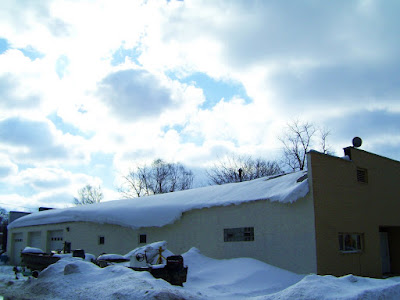
yet when anything falls it's always a surprise

so are sun and clouds
blue skies and grey
and motorboats biding time
in white and shadow
Saturday, January 10, 2009
mourning light

i want to love you like the morning
i want to kick your butt
and kiss the corner of your lips
i would walk a hundred miles
for just one of your smiles
if you love me like the morning
in the afternoon and evening
i want to wrestle with your mind
i want to feel like a slut
lick the hollow behind your ear
and maybe even tie you up
i want your stomach in a knot
at the very thought
of love like the morning
every afternoon and evening
Sunday, January 4, 2009
everywhere a sign
Wax and clay tablets, animal skins and tree bark have been used by humankind to record data for over 4,000 years. Math symbols for addition, subtraction, and other computations have only been around for about 500 years as recorded on paper.
In medieval times p and m, with a bar or wavy line over the top, indicated plus or minus. The first textbook to use the symbols + and - was written in 1498 by Johann Widman, used to indicate business surpluses or deficits.
Robert Recorde, and English mathematician in the sixteen century, introduced the symbols to England, and thereby the rest of the English-speaking world. His mathematical works were written in English; unusual for the time, as most math books were in Latin. (More than one hundred years later, Newton wrote his works in Latin, as did many scholars after him.) Recorde's most famous work was the Whetstone of Witte of 1557. In it he introduced these newfangled signs: “There be other 2 signes in often use of which the first is made thus + and betokeneth more: the other is thus made - and betokeneth lesse”. In the same book he introduced our modern equals sign: “I will sette as I doe often in woorke use, a paire of paralleles, or Gemowe [that is, twin] lines of one length, thus: ======, bicause noe 2. thynges, can be moare equalle”.
The word whetstone in the title of Recorde’s book was a pun on the word coss, then used in English for the unknown thing in algebra (and hence the cossic art or the rule of coss for algebra). This word had come through French from the Italian cosa as a translation of the Arabic shai, “a thing”, but Recorde probably got it from German, where it was also used. The pun arises because in Latin cos means a whetstone. Recorde may have written in English, but he still expected his audience to appreciate a trilingual pun!
The ÷ sign was originally used to indicate writings that were considered dubious, corrupt or spurious. It was first used in a book by Johann Rahn, Teutsche Algebra in 1659, as a symbol for division. Until recently ÷ was used by the Danes to mean subtraction; to avoid confusion they adopted the international usage of division.
The division sign in Rahn’s time was known either as the obelus or sometimes the obelisk, from a Greek word meaning a roasting spit. The idea seems to have been that such dubious matter was thrust through, as with a spit; the word is the same as that for a tapering pillar, another object with a pointed end. Confusingly, the word obelus was later used for the printer’s character we often call a dagger, another symbol with a point.
When people began to write computer languages in the 1950's, there were no keyboard symbols for multiplication and division, so the * and / were used. The forward slash is also known as the solidus, oblique or virgule, among other names.
~ A gull by any other name...
There is math in music, but on an unrelated note, today as I was standing at the bay of Lake Mac, listening to the ice creaking and watching the flocks of gulls, all of a sudden one flock and then another flew up with a raucous cry. As I watched their sky patterns over the middle of the lake, one gull stood out as larger...darker...wait...white head and tail...hmm...always a thrill, bald eagle!
In medieval times p and m, with a bar or wavy line over the top, indicated plus or minus. The first textbook to use the symbols + and - was written in 1498 by Johann Widman, used to indicate business surpluses or deficits.
Robert Recorde, and English mathematician in the sixteen century, introduced the symbols to England, and thereby the rest of the English-speaking world. His mathematical works were written in English; unusual for the time, as most math books were in Latin. (More than one hundred years later, Newton wrote his works in Latin, as did many scholars after him.) Recorde's most famous work was the Whetstone of Witte of 1557. In it he introduced these newfangled signs: “There be other 2 signes in often use of which the first is made thus + and betokeneth more: the other is thus made - and betokeneth lesse”. In the same book he introduced our modern equals sign: “I will sette as I doe often in woorke use, a paire of paralleles, or Gemowe [that is, twin] lines of one length, thus: ======, bicause noe 2. thynges, can be moare equalle”.
The word whetstone in the title of Recorde’s book was a pun on the word coss, then used in English for the unknown thing in algebra (and hence the cossic art or the rule of coss for algebra). This word had come through French from the Italian cosa as a translation of the Arabic shai, “a thing”, but Recorde probably got it from German, where it was also used. The pun arises because in Latin cos means a whetstone. Recorde may have written in English, but he still expected his audience to appreciate a trilingual pun!
The ÷ sign was originally used to indicate writings that were considered dubious, corrupt or spurious. It was first used in a book by Johann Rahn, Teutsche Algebra in 1659, as a symbol for division. Until recently ÷ was used by the Danes to mean subtraction; to avoid confusion they adopted the international usage of division.
The division sign in Rahn’s time was known either as the obelus or sometimes the obelisk, from a Greek word meaning a roasting spit. The idea seems to have been that such dubious matter was thrust through, as with a spit; the word is the same as that for a tapering pillar, another object with a pointed end. Confusingly, the word obelus was later used for the printer’s character we often call a dagger, another symbol with a point.
When people began to write computer languages in the 1950's, there were no keyboard symbols for multiplication and division, so the * and / were used. The forward slash is also known as the solidus, oblique or virgule, among other names.
~ A gull by any other name...
There is math in music, but on an unrelated note, today as I was standing at the bay of Lake Mac, listening to the ice creaking and watching the flocks of gulls, all of a sudden one flock and then another flew up with a raucous cry. As I watched their sky patterns over the middle of the lake, one gull stood out as larger...darker...wait...white head and tail...hmm...always a thrill, bald eagle!
Monday, December 8, 2008
light
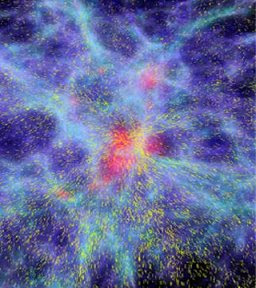
the speed of light stays the same in all frames
mathematically, distance moves with your speed
lengths change and clocks run at different times in different frames -- for real
the time between...as we measure...
an electromagnetic wave
light - time varying electric and magnetic fields
EM radiation carries energy and momentum, which may be imparted when it interacts with matter.
A wave consists of successive troughs and crests, and the distance between two adjacent crests or troughs is called the wavelength. Waves of the electromagnetic spectrum vary in size, from very long radio waves the size of buildings to very short gamma rays smaller than atom nuclei.
the closer together the waves are, the higher the frequency
1 hertz is the approximate frequency of a human heart (Herz in German language)
Einstein thoughts on special relatity:
if you run alongside the e-wave, the electric and magnetic fields will be static (not changing in time) but the wave shape will be varying with where you are.
Maxwell's equations (Maxwell's Electromagnetic Theory) do not allow such a solution, if the fields are varying in space, they also must vary in time.
Einstein therefore concluded that nothing he could do could put him on pace with the light beam. From this he concluded that the electromagnetic wave was a special kind of wave in nature, one which does not require a medium in which to move, and therefore that all observers must see it moving with the same speed, regardless of their own speeds; this is the fundamental postulate of special relativity.
http://www.music.sc.edu/fs/bain/atmi02/fusion/index.html
mathematically, distance moves with your speed
lengths change and clocks run at different times in different frames -- for real
the time between...as we measure...
an electromagnetic wave
light - time varying electric and magnetic fields
EM radiation carries energy and momentum, which may be imparted when it interacts with matter.
A wave consists of successive troughs and crests, and the distance between two adjacent crests or troughs is called the wavelength. Waves of the electromagnetic spectrum vary in size, from very long radio waves the size of buildings to very short gamma rays smaller than atom nuclei.
the closer together the waves are, the higher the frequency
1 hertz is the approximate frequency of a human heart (Herz in German language)
Einstein thoughts on special relatity:
if you run alongside the e-wave, the electric and magnetic fields will be static (not changing in time) but the wave shape will be varying with where you are.
Maxwell's equations (Maxwell's Electromagnetic Theory) do not allow such a solution, if the fields are varying in space, they also must vary in time.
Einstein therefore concluded that nothing he could do could put him on pace with the light beam. From this he concluded that the electromagnetic wave was a special kind of wave in nature, one which does not require a medium in which to move, and therefore that all observers must see it moving with the same speed, regardless of their own speeds; this is the fundamental postulate of special relativity.
http://www.music.sc.edu/fs/bain/atmi02/fusion/index.html
Saturday, October 18, 2008

Friday, October 17, 2008

Wednesday, October 1, 2008
Sand Mandala
 The Sand Mandala (tib: kilkhor) is a Tibetan Buddhist tradition which symbolises the transitory nature of things. As part of Buddhist canon, all things material are seen as transitory. A sand mandala is an example of this, being that once it has been built and its accompanying ceremonies and viewing are finished, it is systematically destroyed.
http://en.wikipedia.org/wiki/Sand_mandala
Wednesday, September 24, 2008
luvz
wind
elan
quiet
peace
change
enigmas
shadows
long hikes
fertile earth
deep thoughts
simple pleasures
early morning
dark nights
blue skies
questions
bare feet
flames
water
trees
neon
rain
elan
quiet
peace
change
enigmas
shadows
long hikes
fertile earth
deep thoughts
simple pleasures
early morning
dark nights
blue skies
questions
bare feet
flames
water
trees
neon
rain
Subscribe to:
Posts (Atom)